Marine Service Pro Elite: California's highest-rated Yamaha Outboards Service Center Learn More

Portable

Read More
Category Video Background
6 Products
Compare: 0 Product

A Yamaha portable outboard is a great fit if you want an engine you can easily transport and handle on your own. The 2.5 HP model weighs around 37 pounds, making it fairly easy to carry. As you move up in power, models in the 6 HP to 9.9 HP range are still manageable for a single person in most situations, though they start to feel noticeably heavier when mounting or removing from the transom.

Every model in Yamaha’s portable range is a 4-stroke, meaning better fuel economy, cleaner emissions, and quieter motoring compared to older, two-stroke designs. This is especially important in states like California, which have tighter emissions standards.

Once you’ve decided to choose an outboard with portability, Yamaha’s engineering reputation makes it the obvious choice. These motors are built to last, whether you’re using them on an inflatable, RIB, or as a kicker on a larger vessel. Plus, RJ Nautical carries factory-manufactured parts and can help maintain your engine with our certified Yamaha nautical technicians.

Finally, most portable models use tiller steering, which keeps the process simple and intuitive. We carry short shaft (15”) and long shaft (20”) options across the full range of outboards. Stop by or give us a call, and we’ll match your boat’s transom height to the best portable outboard motor from Yamaha.

Are Yamaha portable outboard motors 4-stroke?

Yes, every Yamaha portable outboard in this range is a 4-stroke engine. These offer superior performance compared to older 2-stroke models, so you can expect better fuel efficiency, lower emissions, and a noticeably quieter operation at low and idle speeds. Four-stroke engines also tend to require less maintenance over time since there’s no mixing of oil and fuel.

What size boat can a Yamaha portable outboard motor power?

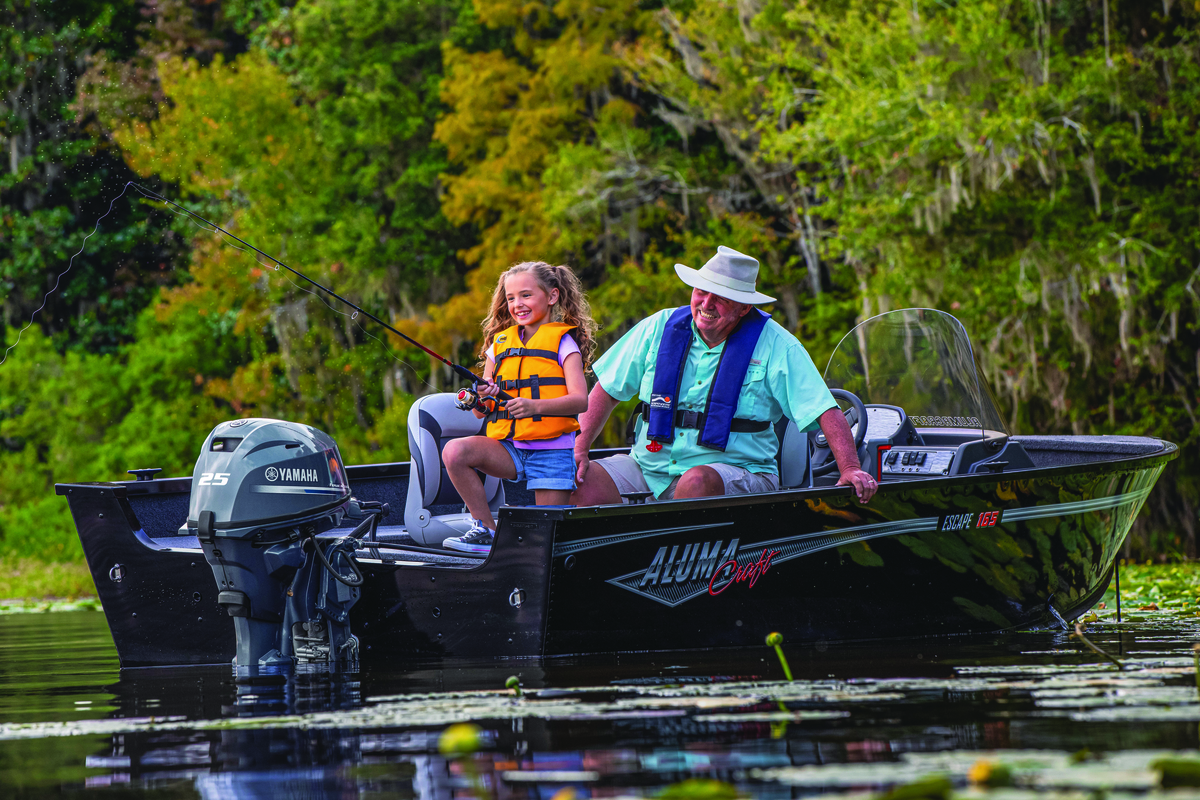
Yamaha portables work best on small aluminum fishing boats, inflatable dinghies, RIBs, tenders, and jon boats. Beyond that, they may not offer enough power to suit your needs unless you plan on using one as an additional kicker.

The best horsepower will depend on your boat’s size, weight, and how you plan on using it. Contact RJ Nautical for a personalized recommendation based on your specific needs.

What's the difference between a short and long shaft outboard motor?

Transom height is the key difference. Short shaft motors have a 15” shaft length, which is designed to suit boats with lower transoms, like inflatables and small dinghies. Long shaft motors are 20”, which fits transoms found on aluminum boats and larger RIBs.

Getting the right length matters because it can impact performance, cooling water intake, and overall handling. If the shaft is too short, the propeller may not remain properly submerged. But if it’s too long, you'll deal with unnecessary drag.